If you’ve ever spent time in food processing equipment maintenance, you know flange bolting is the unsung hero of keeping operations running. One tiny, often overlooked part that comes up all the time? Belleville washers. But lately, I’ve been fielding a ton of questions from food plant maintenance leads and engineers: “Can we actually use these in our flange bolting setup without risking contamination or messing with safety?” As a Belleville washer supplier that works exclusively with food and beverage processing teams, I get why this is such a big deal—no one wants to deal with a sanitation fail or a bolt coming loose mid-process. Let’s break this down like we’re chatting in a break room over coffee, no stuffy engineering jargon. Flange Bolting Belleville Washer

First, let’s get on the same page about what Belleville washers do here, because that’s half the battle. Flanges in food equipment—think pipe connections, reactor vessels, or even homogenizer setups—constantly deal with thermal cycling. Steam cleaning at the start of a shift, hot product running through lines, then cooling down between batches? That’s a recipe for bolt stretch and loss of preload, which leads to flange leaks. Belleville washers (sometimes called disc springs for the tech crowd) are conical metal discs that flatten when compressed, creating a consistent clamping force even when things shift. No more retightening bolts every other week, no more worrying about gaps that let food debris or bacteria sneak in. For food processing, that reliability isn’t just convenient—it’s non-negotiable for meeting FDA and 3-A Sanitary Standards, right?
Now, the big question: are they actually approved for food use? Short answer, yes—if you pick the right ones. But let’s skip the “yes/no” cop-out and dive into the details that matter for this industry. The first non-negotiable is material. You can’t just grab any generic steel Belleville washer off the shelf here. Food equipment can’t touch anything that leaches chemicals, rusts, or harbors bacteria. So you’re looking for 316 stainless steel, full stop. Not the cheaper 304 grade—316 has molybdenum in it, which makes it way more corrosion-resistant to things like salt brines, acidic sauces, and caustic cleaning agents that are standard in food processing plants. I’ve seen way too many guys grab 304 to save a buck, only to have washers pit and corrode after a month of CIP (Clean-in-Place) cycles. That’s a contamination risk you can’t afford, so stick with 316 every single time.
Next up, sanitation. Food plants have super strict protocols for every part that touches product or even just the process environment. Belleville washers need to be smooth, no crevices, no rough edges where gunk can build up. That means polished surfaces—at least a #4 finish, which is the same smooth, easy-to-wipe finish you see on stainless steel sinks in commercial kitchens. If you get a washer with sharp edges or tool marks, that’s a hiding spot for bacteria like Listeria or Salmonella. Not only is that a health hazard, it’ll get you flagged in an FDA audit, and no plant wants that on their record. Also, avoid any Belleville washers with coatings—even “food-grade” coatings can flake off over time from repeated compression and cleaning. Stick with bare 316 SS, it’s the safest and most reliable.
Wait, but how do you actually use them right in flange bolting? A lot of guys just stack them randomly and call it a day, but that’s a mistake. For flanges, you want to stack Belleville washers in parallel—meaning you put them right-side up on top of each other under the bolt head or nut. Parallel stacking multiplies the clamping force without changing the deflection rate, which is perfect for compensating for that thermal stretch. If you stack them in series (flipping every other one), that’s for different applications like heavy machinery, not flanges. Also, don’t overstack—usually 1 to 3 washers per bolt is enough, depending on the flange size. Our team always tells customers to run a deflection calculation specific to their bolt diameter and flange pressure, but we’ve got a simple cheat sheet too if you don’t want to dig into the math.
Now, let’s talk about common concerns people have had. The first one I hear all the time: “Do Belleville washers trap moisture or food debris?” Nope, not if you install them right. Since they’re 316 stainless, they don’t rust, and the polished finish means nothing sticks to them. As long as you tighten bolts to the correct preload (which Belleville washers actually help maintain, so you don’t over-torque and damage the bolt or flange), the gap between the washer and flange is tight enough that gunk can’t get in. Another fear: “Will they break or fail under high pressure?” From what I’ve seen working with 50+ food processing plants, they hold up way better than regular flat washers. Flat washers can’t compensate for thermal expansion, so after a few cycles, your preload drops by 20-30% and leaks start. Belleville washers keep that preload within 10% of original for months, even with frequent CIP cycles.
But wait, there’s a catch—like with any part, bad installation negates all the benefits. I had a craft beer plant reach out to me last year saying their flanges were leaking every other batch, even after switching to “food-grade” washers. Turns out they bought cheap imported washers that were marked 316 but were actually 304, and they stacked them in series because a old maintenance guy told them it was better. Once they swapped to our 316 SS parallel-stacked Belleville washers and tightened to the correct preload, the leaks stopped completely for 6 months straight. That’s the kind of win we live for.
Now, let’s tie this back to why this matters for your operation specifically. Food processing equipment downtime costs way more than the washers themselves—like, a single hour of line downtime in a big canning plant can cost tens of thousands of dollars. Belleville washers reduce that downtime by cutting down on bolt retightening and flange leaks. Plus, they’re cheap enough that switching them out at every overhaul (which is standard for food plant maintenance) is no big hit to the budget. And from a compliance standpoint, using the right Belleville washers is a documented way to show you’re using parts that meet food safety standards, which is a huge plus for audits.
If you’re still on the fence, here’s a quick checklist to make sure you’re using Belleville washers correctly in flange bolting for food processing:
- Material: 316 stainless steel, no exceptions.
- Finish: #4 polished or smoother, no rough edges.
- Stacking: Parallel (same direction) under bolt head or nut.
- Quantity: 1-3 washers per bolt, based on flange size.
- Installation: Tighten to manufacturer’s specified preload for your bolt grade.
I’ve spent years perfecting this for food processing plants, so if you’re not sure about your current setup, or you need custom sizes for a weird flange you’ve got, hit us up. We don’t do one-size-fits-all here—we work with your maintenance team to get exactly what you need, no fluff, no overpriced “premium” parts that don’t actually add value. At the end of the day, your job is to keep product moving and keep your facility safe, and our job is to make the flange bolting part of that as easy and reliable as possible.
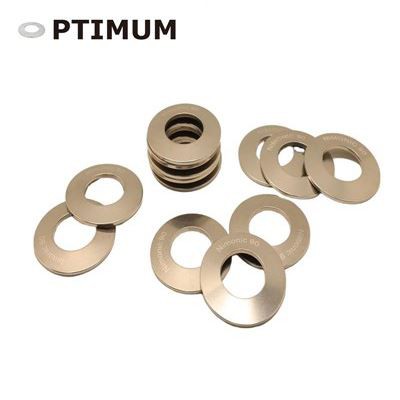
If you’ve had issues with bolts coming loose, flange leaks, or just want to upgrade your current setup, don’t hesitate to reach out. We’re here to answer any questions, no sales pitch pressure—just solid advice from people who know food equipment inside and out.
Flange Bolting Belleville Washer References:
- 3-A Sanitary Standards, Inc. Standard Number 18-03: Design, Fabrication, and Material of Equipment for Food, Dairy, and Beverage Processing.
- FDA Food Safety Modernization Act (FSMA) Preventive Controls for Human Food, Part 117: Current Good Manufacturing Practice, Hazard Analysis, and Risk-Based Preventive Controls for Human Food.
- Shigley, J. E., & Mischke, C. R. Mechanical Engineering Design, 5th Edition: Disc Springs and Their Applications in Flange Bolting.
- National Sanitation Foundation (NSF) International. NSF/ANSI Standard 51: Material Equipment for Food.
Yangzhou Optimum Spring Manufacturing Co., Ltd.
As one of the most professional flange bolting belleville washer manufacturers and suppliers in China, we’re featured by quality products and good service. Please rest assured to buy customized flange bolting belleville washer made in China here from our factory. For more information, contact us now.
Address: No.9 West of Shuangtang Rd, Yangzhou, P.R. China 225000
E-mail: susie@optimum-spring.com
WebSite: https://www.optimum-spring.com/
