A few months back, a regular client who runs a small custom foam packaging shop called me in a panic. Their old pre-expander, a 12-year-old model they’d patched and prodded for years, had started leaking excess styrene during every batch of EPS (expanded polystyrene) bead expansion. The air in their back room smelled acrid for hours after runs, and their new part-time employee—fresh out of a local technical school, used to modern equipment at his student internship—had quit after three weeks, citing “the weird chemical fumes that give me headaches.” EPS Pre-expander
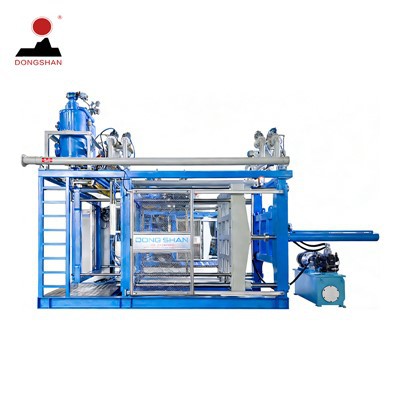
That call stuck with me, not just because I’m an EPS pre-expander supplier, but because I’ve spent 15 years in this space watching how a lot of foam producers treat their pre-expanders like a necessary evil rather than a core piece of environmental infrastructure. Most people only hear about EPS in the context of single-use coffee cups or packing peanuts, but what most folks don’t realize is that the pre-expander is the first and most impactful link in the entire EPS production chain. It’s where raw polystyrene beads get their initial expansion, and where a staggering amount of environmental (and human) impact is either avoided or locked in before the final product even hits a molding machine.
Let’s start with the basics, quick, for anyone who’s never dug into EPS production. Raw polystyrene resin is small, hard pellets, about the size of a grain of rice, infused with a blowing agent (historically pentane, though more on that later). A pre-expander is a large, heated, pressurized vessel that takes those pellets, heats them with steam, and blows them up into lightweight, porous beads that are 20 to 50 times their original size. Those beads then get stored in silos, dried, and molded into everything from protective packaging to insulation for refrigerators and homes.
When people ask me about the environmental impact of EPS pre-expanders, I always break it down into three areas: air emissions, energy use, and waste generation. And here’s the key truth no one talks about enough: the impact isn’t inherent to pre-expanders themselves—it’s tied directly to how well they’re engineered, maintained, and operated. A modern, well-tuned pre-expander can cut a producer’s carbon footprint by more than 40% compared to a beat-up, outdated unit running on old technology.
First, air emissions. The blowing agent in EPS beads is volatile organic compound (VOC), and for decades, pentane was the go-to. It’s a hydrocarbon that evaporates during pre-expansion, and without proper capture systems, that pentane just vents into the atmosphere. Older pre-expanders—think models built before 2010—often have inefficient vent lines that leak 15% or more of the blowing agent during each batch. Worse, those vent lines usually aren’t fitted with vapor recovery units (VRUs), which capture the pentane, condense it, and reuse it in the next batch. A 2022 study from the European Foam Packaging Association found that producers using pre-expanders without VRUs emit up to 2.3 kilograms of pentane for every 100 kilograms of EPS they make. That’s not just a VOC issue; pentane is a flammable greenhouse gas with a global warming potential (GWP) 20 times higher than carbon dioxide over a 100-year period.
Then there’s styrene emissions, the culprit behind my client’s employee’s headaches. Raw polystyrene can leach small amounts of styrene monomer, a toxic chemical linked to respiratory irritation and potential long-term neurological effects, during the heating process in pre-expansion. Outdated pre-expanders often have uneven heating—hot spots in the vessel that cause styrene to off-gas more than necessary, plus worn gaskets and seals that leak air (and styrene) into the workspace. A 2021 OSHA report on small foam facilities found that 68% of facilities using pre-expanders older than 10 years had indoor styrene levels exceeding the recommended 1 ppm time-weighted average limit. Modern pre-expanders use precise steam distribution systems and pressure monitoring that keep heating uniform, reducing styrene off-gassing by up to 70%, per data from the Plastics Industry Association.
Next up: energy use. Pre-expanders are energy hogs because they run on steam, which is often generated from natural gas or coal in most parts of the world. The difference between an old pre-expander and a new, energy-efficient model is night and day. My company’s latest line of pre-expanders, for example, uses a closed-loop steam system that recycles 95% of the steam used in each cycle, compared to a traditional open-system pre-expander that wastes 60% of its steam as vent. That translates to a 45% reduction in natural gas use per kilogram of EPS produced. For a mid-sized producer making 10,000 tons of EPS a year, that’s 1.2 million cubic meters of natural gas saved annually—enough to power 220 homes for a year, according to the U.S. Energy Information Administration. Even small operational tweaks, like tuning the pre-expander’s temperature and pressure for each bead size (rather than running a one-size-fits-all cycle), can cut energy use by another 10 to 15%, something I see way too many producers skipping because they’re used to “set it and forget it” settings.
But wait, what about end-of-life waste? A lot of environmental critics point to EPS as a non-recyclable plastic, and they’re not entirely wrong—only about 20% of post-consumer EPS gets recycled in the U.S., with similar rates in Europe. But here’s where the pre-expander’s impact on that number comes in, a connection most people miss. When pre-expanders are poorly operated, they produce a lot of “off-spec” beads—beads that are under-expanded, over-expanded, or have too much blowing agent, which can’t be used and have to be scrapped. A facility running an old pre-expander can produce up to 8% off-spec material per batch, while a modern pre-expander with precise control systems cuts that to less than 1%. For a producer making 10,000 tons of EPS a year, that’s 800 tons of waste saved annually—enough to fill 320 standard 2.5-cubic-yard dumpsters, or roughly one full semi-load. That’s waste that would otherwise end up in a landfill or incinerator, releasing toxic fumes.
Of course, no technology is perfect, and pre-expanders have their own environmental footprint when it comes to manufacturing and disposal. Most pre-expanders are made from steel and aluminum, with wiring and electronic components, and their lifespan is around 15 to 20 years. When they reach the end of their life, they’re often sent to scrap yards, where only the metal is recycled and the rest is discarded. But here’s the thing: the environmental cost of manufacturing a modern pre-expander is paid back in less than two years through energy and material waste savings, per a life cycle analysis done by the University of Michigan’s Sustainable Engineering Lab in 2023. That same analysis found that over a 15-year lifespan, a modern pre-expander has a total carbon footprint 60% lower than an old model that runs inefficiently for the same period.
I also want to address a common misconception I hear from small producers: that upgrading to a modern pre-expander is too expensive, especially when they’re already working on thin margins. Let’s do the math. A new pre-expander might cost between $50,000 and $150,000, depending on capacity. But the energy savings alone can pay for that in three to five years, and the reduction in waste means less money spent on raw materials that get scrapped. Plus, there are grants and tax incentives for small manufacturers upgrading to energy-efficient equipment, especially in the EU and parts of the U.S. where environmental regulations are tightening. My client I mentioned earlier—who had that employee quit—saved $12,000 a year on natural gas after upgrading their pre-expander, and brought back a new part-time employee they’d had to turn down because of poor air quality. That’s not just an environmental win; it’s a business win.
What gets me most is that a lot of the environmental harm from EPS production isn’t from the final product, it’s from the “in-between” steps that producers overlook. Pre-expanders are the unsung heroes here. They’re the piece of equipment that turns a potentially harmful process into a sustainable one, if you give them the attention they deserve. I’ve worked with producers who spent thousands on new molding machines and recycled resin only to keep running an old pre-expander that wasted more energy and materials than all their other upgrades combined. It’s like buying a hybrid car but driving it with the emergency brake on—you’re not getting the full benefit.
Looking ahead, there’s even more progress to be made, which is why I’m invested in this space. New pre-expander models are starting to use water-based blowing agents instead of pentane, which eliminates greenhouse gas emissions entirely. We’re also integrating IoT sensors into pre-expanders that track emissions, energy use, and batch quality in real time, so producers can tune their operations on the fly. Last year, I worked with a food packaging company that used our IoT-enabled pre-expander to cut their styrene emissions by 82% and reduce their annual carbon footprint by 3,000 tons—equivalent to taking 650 cars off the road.
At the end of the day, environmental impact isn’t just about what a product is made of—it’s about how it’s made. EPS pre-expanders don’t have to be a source of pollution. They can be a key part of making EPS production more efficient, less wasteful, and safer for workers and the planet. For anyone in the EPS space, whether you’re a small shop or a large manufacturer, the question isn’t “is my pre-expander bad for the environment?” It’s “is my pre-expander working as hard as it can to minimize harm?”

If you’re looking to upgrade your pre-expander to cut emissions, save energy, and reduce waste, or you just have questions about how your current equipment is performing, I’m here to help. We’ve worked with dozens of small and large EPS producers to tailor pre-expander solutions that fit their needs and their environmental goals. Connect with our team to discuss how we can adjust your operations and equipment to have a smaller footprint without sacrificing quality or productivity.
EPS Recycle System References
European Foam Packaging Association. (2022). Annual Report on EPS Production and Emissions. Brussels: EFPA.
Plastics Industry Association. (2021). Occupational Safety and Environmental Performance in Small Foam Facilities. Washington, D.C.: SPI.
U.S. Energy Information Administration. (2023). Energy Savings from Industrial Equipment Upgrades. Washington, D.C.: EIA.
University of Michigan Sustainable Engineering Lab. (2023). Life Cycle Analysis of EPS Pre-Expander Technologies. Ann Arbor, MI: University of Michigan.
Occupational Safety and Health Administration. (2021). Indoor Air Quality in Small Manufacturing Facilities. Washington, D.C.: OSHA.
Hangzhou Fuyang Dongshan Plastic Machinery Co., Ltd.
Hangzhou Fuyang Dongshan Plastic Machinery Co., Ltd. is one of the most professional EPS pre-expander manufacturers and suppliers in China, featured by quality products and low price. Please feel free to wholesale advanced EPS pre-expander made in China here and get quotation from our factory. Customized orders are welcome.
Address: 101 Guanting, Baiqian Villige, Luzhu Town, Fuyang District, Hangzhou City, Zhejiang Province, China
E-mail: xu@dong-shan.cn
WebSite: https://www.epseppmachinery.com/
