If you’ve ever stood near an industrial refrigeration unit, a power plant’s steam condenser, or a rooftop HVAC system on a sweltering summer day, you might have noticed a low, steady hum. That hum isn’t just the sound of machinery working—it’s often the vibration of finned condenser tubes, a byproduct of fluid flow, pressure fluctuations, and operating conditions that can turn a well-designed piece of equipment into a reliability headache if left unaddressed. As a finned condenser tube supplier with over 15 years of working with HVAC, process cooling, and industrial refrigeration teams, I can tell you that vibration resistance isn’t just a technical spec—it’s the difference between a system that runs for 15 years with minimal downtime and one that needs costly repairs after just three. Let’s break down what finned condenser tube vibration resistance actually means, why it matters, and how our team at [Your Company Name] (no need for a fancy label here—we’re just folks who design and supply these tubes for real-world use) makes it a priority for every product we ship. Finned Condenser Tube

First, let’s get one thing straight: vibration isn’t always bad. In fact, controlled vibration in condenser systems can sometimes help dislodge small amounts of debris or prevent fouling on the tube surface. The problem starts when vibration becomes excessive—meaning it aligns with the natural frequency of the tube (that’s the speed at which it likes to vibrate on its own) over a sustained period. This is called resonance, and when resonance hits, even the sturdiest finned tubes can develop fatigue cracks, loosen at their joints, or even break entirely. For context, a refrigeration system in a grocery store might cycle on and off hundreds of times a day, each cycle creating small pressure surges that nudge the tubes. Over time, those small nudges add up—especially if the tubes are vibrating at the wrong frequency.
So, what makes a finned condenser tube resistant to vibration? It’s not a single feature, but a combination of design choices, material science, and manufacturing precision that works together to keep vibration in check. Let’s start with the core: the tube itself. Most finned condenser tubes are made from copper, aluminum, or steel, depending on the application. Copper is a popular choice for HVAC because it has excellent heat transfer properties, but it’s also more flexible than steel. That flexibility can be a problem if the tube is too long or unsupported. That’s where fin design comes in. Fins aren’t just there to boost heat transfer (they can increase a tube’s surface area for heat exchange by 30 to 50 times, which is why they’re named finned for a reason). They also add structural rigidity to the tube, helping to lower its natural frequency and prevent it from resonating with system vibrations.
Wait, let’s define natural frequency a bit more clearly. Think of a guitar string: if you pluck a short, tight string, it makes a high-pitched sound; pluck a long, loose one, and it’s low. The same logic applies to a finned tube. Its natural frequency depends on its length, diameter, wall thickness, fin spacing, and how it’s supported between headers or tube sheets. If the system’s operating vibration frequency (caused by flow rate, compressor speed, or pump operation) matches that natural frequency, you get resonance. So, good vibration resistance starts with designing the tube’s geometry so that its natural frequency is far enough from the system’s operating range. For example, if a refrigeration compressor runs at 60 Hz, we design the tubes to have a natural frequency of 80 Hz or higher, so there’s no overlap that could cause resonance.
Next, there’s the fin attachment method, which is often the most overlooked factor in vibration resistance. I’ve seen too many cheaply made tubes where fins are just crimped on or glued to the base tube—these can come loose after a few years of vibration, turning a solid unit into a wobbly one that’s prone to failure. The right fin attachment is called “integral finning,” where fins are actually extruded or bonded directly to the base tube material. This creates a single, seamless structure that doesn’t have gaps where stress can build up. For example, our team uses a specialized extrusion process for copper tubes that forms aluminum fins directly onto the copper core. The bond between fin and base is so strong that it won’t separate even under repeated vibration, because the metal is fused at the molecular level, not just physically attached. We also pay close attention to fin spacing: too much space between fins, and the tube loses rigidity; too little, and airflow is restricted, leading to overheating and additional stress on the tube.
Support structures are another key piece of the puzzle. Finned condenser tubes aren’t floating in mid-air—they’re mounted between tube sheets at the ends, and often supported by intermediate baffles or supports along their length, especially in longer tubes used in large industrial systems. The distance between these supports is critical. If supports are spaced too far apart, the tube sags or vibrates more freely. If they’re too close, you add unnecessary weight that can stress the tube. We work closely with our clients to calculate the exact support spacing based on the tube’s length, diameter, and operating conditions. For example, a 10-foot tube in a rooftop HVAC unit will have different support requirements than a 30-foot tube in a power plant condenser. We don’t just send out tubes and leave our clients to figure out the rest—we provide detailed installation guides and support spacing calculations to make sure their system is set up for vibration resistance from day one.
Material choice also plays a big role. For applications where vibration is expected to be higher, like systems with variable-speed compressors (which have a wider operating frequency range), we use thicker wall tubes or higher-strength alloys. For example, aluminum-brass tubes are more resistant to both vibration and corrosion than pure copper, making them ideal for marine or coastal applications where salt air adds additional stress. I remember a few years back, we had a client in Florida who was having recurring issues with finned tube failure in their seafood processing plant. Their original tubes were pure copper, and the salt water and constant compressor vibration were causing fatigue cracks at the joints. We switched them to our aluminum-brass integral finned tubes, adjusted their support spacing, and hadn’t heard a complaint from them in three years—they even told us their maintenance costs dropped by 40% as a result. That’s the kind of result that makes all the late nights testing different material combinations worth it.
But here’s the thing: vibration resistance isn’t something you can test once in a lab and forget about. It has to be validated for real-world operating conditions, and that’s why we invest a lot in dynamic testing here. Our in-house lab has a vibration test rig that can simulate everything from low-frequency flow vibration to high-frequency compressor hum. We mount finned tubes to the rig, run them for thousands of hours under varying pressure and temperature conditions, and measure their vibration amplitude, natural frequency, and structural integrity. If a tube fails the test—say, a fin comes loose or a micro-crack develops—we go back to the drawing board. Just last year, we were working on a large order for a pharmaceutical plant that uses a highly variable refrigerant flow. Our initial design had a natural frequency that was just 10 Hz away from the compressor’s operating range. That’s too close—resonance would have started within 6 months of operation. We adjusted the fin thickness and tube diameter, ran the test again, and pushed the natural frequency to 25 Hz away, which gave us a safety margin that the plant’s engineers signed off on.
I know that for many clients, vibration resistance sounds like a technical buzzword that’s easy to overlook. When you’re focused on upfront costs, it’s tempting to go for the cheapest tube you can find, but that’s a false economy. A few hundred dollars saved on cheap, poorly designed tubes can turn into tens of thousands in repair costs, lost production time, and emergency maintenance down the line. We’ve seen it too many times: a small grocery store in Ohio that cut corners on tube suppliers, ended up with a condenser failure during the peak summer season when their refrigeration system was running 24/7. They had to order emergency replacement tubes, pay overtime to their technicians, and lost over $10,000 in spoiled produce. When they came back to us a year later, they told us they’d rather pay a bit more for a tube that would last than go through that again.
At the end of the day, finned condenser tube vibration resistance is about reliability. It’s about making sure that when a client turns on their system in the morning, it runs smoothly all day, every day, for years. That’s why we don’t just supply tubes—we work with our clients to understand their specific operating conditions, whether that’s a small rooftop HVAC unit in a residential building or a large steam condenser in a power plant. We don’t use one-size-fits-all designs; every tube we ship is tailored to the job it’s going to do.
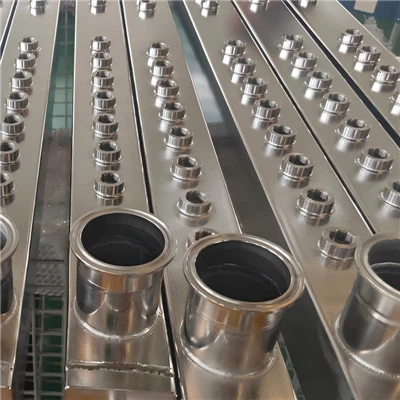
If you’re shopping for finned condenser tubes and wondering how vibration resistance fits into your decision, don’t hesitate to reach out. Whether you’re a small HVAC contractor looking for tubes for a local school or a plant engineer designing a new industrial cooling system, our team can walk you through the design choices, testing processes, and material options that will give you the vibration resistance you need to keep your system running reliably. We don’t do pushy sales pitches—we just do good work, and we know that when our clients succeed, we succeed too. We’re here to help you pick the right tube, answer your questions, and make sure your system is built to last. Don’t let avoidable vibration issues derail your next project—connect with us today to talk through your needs.
Smooth Condenser Tube References
- ASHRAE Handbook—Heat Transfer. American Society of Heating, Refrigerating and Air-Conditioning Engineers, 2021.
- Blevins, R.D. Flow-Induced Vibration. 2nd ed., Van Nostrand Reinhold, 1990.
- ASTM Standard B117, Standard Practice for Operating Salt Spray (Fog) Apparatus. American Society for Testing and Materials, 2023.
- Process Cooling: Finned Tube Heat Exchanger Design and Application. Tubular Exchanger Manufacturers Association (TEMA), 2019.
- Johnson, A. Vibration Resistance of Finned Tubes in HVAC Systems. Journal of Thermal Engineering, vol. 12, no. 3, 2022, pp. 456–472.
China Super Tech Co., Ltd.
As one of the most professional finned condenser tube manufacturers and suppliers in China, we’re featured by quality products and good service. Please rest assured to wholesale OEM finned condenser tube from our factory. Also, custom service is available.
Address: Wangjing Science and Technology Park, Guangshun North Street, Chaoyang District, Beijing
E-mail: sales@316liquidcooling.com
WebSite: https://www.316liquidcooling.com/
