Hey there, welcome to our little corner of the lighting world. If you’ve ever shopped for LED high bay lights (I’m one of the suppliers you might’ve talked to before—no stuffy corporate vibes here, just real talk), you’ve probably asked this question: Can I actually dim these big, bright workhorses instead of blasting 100% light all day? LED High Bay Light
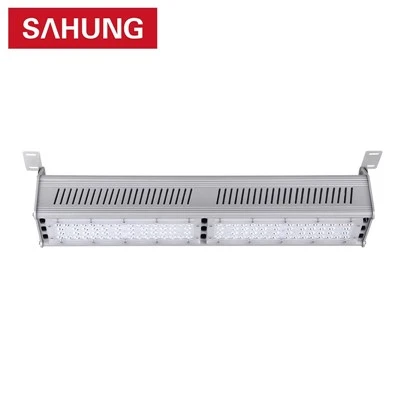
I get it. Dimming makes total sense for so many spaces. Maybe you run a warehouse where the loading dock only needs half the brightness at night, or a manufacturing floor where certain workstations don’t need full output, or even a retail space where you want to set a calmer mood for evening customers without reconfiguring every light. Back in the old days, dimming fluorescent or metal halide high bays was a hit-or-miss, frustrating mess. But with LEDs? It’s not just possible—it’s actually way simpler than you think… as long as you do it right.
First, let’s bust the biggest myth I hear all the time: “All LED high bay lights dim.” No, sorry, that’s not true. I’ve had customers tell me they ordered a batch of LEDs from a random overseas seller, hooked them up to an old dimmer, and nothing happened—or worse, the lights flickered like a bad horror movie. Why? Because LEDs don’t work the same way as the old lights you’re used to. A basic non-dimmable LED high bay has a driver built to push a fixed amount of power, no adjustments. Tugging that string with a dimmer designed for incandescents? It’s like trying to steer a truck with a toy remote—you’re not gonna get anywhere, and you might break something.
So the first rule: You have to get dimmable LED high bay lights. It’s not a special upgrade or a fancy add-on, honestly—when you work with a supplier (read: me, if you want) that focuses on quality, dimmable is just as reliable as non-dimmable, as long as the driver and the light are matched correctly. The driver is the brain of the LED, right? It’s what converts your building’s AC power to the low-voltage DC power LEDs need. A dimmable driver has extra circuitry that lets it adjust that power level when it gets a signal from a dimmer. Without that, your dimmers are just pretty switches.
Now, the next big question: What kind of dimmer do you need? This is where most DIYers mess up, and where I’ve saved so many customers from headaches. Old dimmer switches are made for incandescents or maybe fluorescent, which work on different voltage and resistance than LEDs. If you slap an old incandescent dimmer on a dimmable LED high bay, you’ll get flickering, buzzing, or even the lights cutting out entirely, especially when you dim below 30-40% brightness. That’s not the LED’s fault—that’s a bad dimmer match.
For most standard applications, you’ll need an LED-compatible dimmer, specifically one rated for the total wattage of your dimmable high bays. Don’t try to cram 10 100W high bays onto a dimmer rated for 50W—math still applies here, even with LEDs. There are two main types of dimmers that work with LEDs, and which one you pick depends on your setup: leading-edge and trailing-edge. Leading-edge dimmers are the cheaper, more common ones you’ll find at home improvement stores, and they work okay for small loads, but they can have more flicker. Trailing-edge dimmers are the smoother option, better for larger LED installations like warehouses or big retail spaces, and they work down to lower brightness levels without that annoying buzz. If you’re not sure which one you have, or which you need, just ask your supplier—we test every dimmable light we sell with both types, so we can tell you exactly what’ll work for your space.
Wait, what about smart dimmers or DMX systems for bigger setups? Oh, right, that’s the next level. If you’re managing a space with dozens or hundreds of high bays—say a big distribution center, a gym, or a concert venue—you probably don’t want to run a single dimmer switch for every light. That’s where programmable dimmers, smart lighting controls, or DMX (Digital Multiplex) systems come in. Smart systems let you group lights, set schedules, adjust brightness via an app, or even sync with sensors that dim lights automatically when no one’s in a area. I’ve worked with a sports facility client that uses motion sensors paired with dimmable high bays—when the gym is empty after hours, the lights drop to 10% for security, and pop back to 100% when a trainer walks in. That’s not just convenient; it cuts their energy bill by 30% in the first six months. Worth the small extra cost, right?
Now, let’s talk about when dimming might not be the best idea. Because even if you can dim a light, that doesn’t always mean you should. If you’re using high bays for safety-critical spaces—like a manufacturing line where workers are operating heavy machinery, or a loading dock where drivers need clear visibility at all times—you don’t want to dim those below the minimum required for OSHA or local codes. Also, some lower-quality dimmable LEDs (I’m looking at the stuff off Amazon that’s super cheap) might have shorter lifespans when dimmed constantly, because the driver isn’t built to handle regular adjustments. That’s why I always tell customers to go with reputable lights—we use high-quality drivers from manufacturers that test every dimmable unit, so you won’t have to replace your high bays every two years because of bad dimming.
Another common question: Will dimming LED high bays actually save money? Yes, for real, not just a marketing line. LEDs are already way more efficient than metal halide or fluorescent, but dimming cuts your power use even more. Most dimmable LEDs will use about 50% less power when set to 50% brightness, and up to 70% less at 20% brightness. That adds up fast for big spaces. I had a warehouse client that switched from non-dimmable metal halides to our dimmable high bays, and with a scheduling system that dimmed unoccupied areas, their lighting costs went down 45% in a year. That’s not pocket change—that’s money you can put back into growing your business.
Wait, what about compatibility with existing wiring? A lot of people worry about that. If you’re swapping out old non-dimmable high bays for new dimmable ones, most of the time you can reuse the existing wiring in your ceiling, as long as the wiring is in good shape and the total wattage doesn’t exceed what the circuit can handle. But if you’re installing new lights, or adding a bunch more, it’s never a bad idea to have an electrician check your circuit capacity. I always recommend that, especially for larger installations—no need to risk a fire or tripped breakers just to save a few bucks on an electrician call.
Let me also clear up a problem I hear all the time: when a dimmable LED doesn’t dim smoothly. Sometimes it does that weird “staircase” thing where it jumps from 100% to 50% to 0% instead of fading, or it flickers when you get below a certain level. More often than not, that’s not the light—it’s the dimmer. Either the dimmer isn’t rated for enough LED load, or it’s not compatible with the type of driver in your high bay. I had a customer a few months ago who tried to use a cheap leading-edge dimmer on our high bays, and he emailed me panicking because the lights were flickering. I sent him a free trailing-edge dimmer, and the problem was gone. No new lights, no rewiring, just the right part. That’s the kind of service we do around here—no runaround, no “it’s not our fault.”
Is there any other catch? Maybe color temperature shifting? Wait, no, good quality dimmable LEDs won’t shift color when dimmed. The super cheap stuff might, where it gets warmer or more blue as you dim, but our lights stay consistent from 10% to 100% brightness. That’s why testing is key—when you work with a reliable supplier, you know what you’re getting, not a random batch that changes color when you turn the dimmer.
So to circle back to the original question: Can you dim an LED high bay light? Absolutely. But only if you get the right parts and do it the right way. Non-dimmable LEDs won’t work with standard dimmers, cheap dimmers will cause headaches, and low-quality lights might not hold up to regular dimming. But when you pair quality dimmable high bays with the correct dimmer or control system, you get a flexible, energy-saving lighting setup that works for your space, whether that’s a warehouse, a gym, a retail store, or a manufacturing facility.
If you’re ready to make the switch, or just have more questions about what dimmable high bays would work for your space, don’t hesitate to reach out. We help customers pick the right lights, the right dimmers, and even work with electricians to make sure the install goes smooth. No complicated jargon, no pushy sales pitches—just real advice for your real space.
Stadium Light References:
- U.S. Department of Energy. (2022). LED Lighting Facts: Dimmable LEDs. U.S. Department of Energy.
- Lighting Research Center. (2021). Dimming Performance of LED High-Bay Fixtures. Rensselaer Polytechnic Institute.
- National Electrical Manufacturers Association. (2020). Standard for Dimming LED Lighting Systems. National Electrical Manufacturers Association.
Hangzhou Shanghong Electronic Technology Co., Ltd.
We are one of the most experienced led high bay light manufacturers and suppliers in China. With a professional production team, we offer a wide range of products with superior quality. Please feel free to wholesale custom made led high bay light from our factory.
Address: 5F, Building A, No.7 Xiyuan 2nd Road, Xihu District, Hangzhou City, Zhejiang, China.
E-mail: sales3@sahung.com
WebSite: https://www.sahung-light.com/
