Hey there, if you’ve been Googling “can I install an aluminum lift by myself” and landed here, chances are you’re a small business owner, a contractor with a few projects under your belt, or maybe even a DIYer who’s tackled stuff like patio decks or fence installations before. As an aluminum lift supplier, I get tons of these questions in my DMs and at trade shows, and honestly? The answer isn’t a simple yes or no—it depends on a lot of factors, from your toolbox to your level of experience, and even the type of aluminum lift you’re looking at. Let me break this down straight, no corporate fluff, just the real stuff I tell customers every week. Aluminum Lift
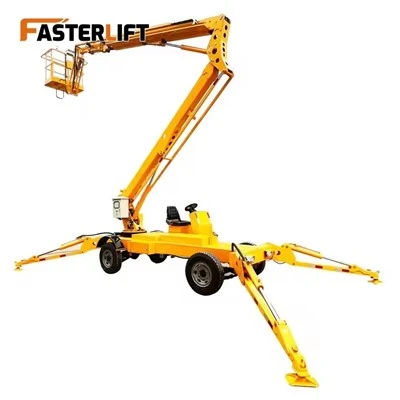
First, let’s start with what an aluminum lift actually is, because a lot of folks mix these up with the big steel scissor lifts you see on construction sites. Our aluminum lifts are lightweight, modular, way easier to move around, and designed for indoor use—like changing ceiling fans, painting warehouse shelves, or cleaning storefront windows. They’re not the heavy-duty models that require a crew to hoist onto a flatbed; most are built with interlocking aluminum components that make transport and set-up way more manageable for one person. But that doesn’t mean it’s “set it and forget it.” I’ve seen a guy try to put a 20-foot aluminum lift together by himself and end up with a wobbly mess because he skipped the torque specs on the base bolts.
Let’s talk about the good news first: if you’re a DIYer with basic hand tools, this is doable. Most of our entry-level aluminum lifts (think models under 18 feet platform height) come with clear, photo-based instructions—no fancy jargon, just step-by-step shots. You’ll need a few standard tools: a socket wrench set, a level, a rubber mallet, and maybe a drill for pre-drilling pilot holes (though most of our kits don’t require that). For example, our 14-foot aluminum push-around lift has a base that’s two foldable aluminum frames, so you just unfold them, lock the cross-braces, attach the platform, and you’re done in like 20 minutes. I’ve had customers who aren’t exactly “handy” pull this off—one lady in Chicago used it to install a chandelier in her dining room, and she texted me a pic of herself on the platform 10 minutes after unboxing it. That said, there’s a catch here: if you’re working with a lift over 18 feet, that’s when solo installation gets tricky. Taller aluminum lifts have larger bases, heavier platforms, and sometimes hydraulic components, which mean more parts to handle alone. I’d warn against going over 18 feet by yourself—you might not be able to lift the platform onto the base without straining yourself, and misaligning the hydraulic lines could lead to leaks.
Now, let’s get into the risks, because this isn’t something to brush off. Aluminum lifts are portable, but they’re not unbreakable, and improper installation leads to accidents. Last year, a customer tried to install a 22-foot aluminum lift by himself, didn’t fully lock the outriggers, and it toppled over when he stepped on the platform. He ended up with a sprained ankle, and the lift had a bent frame that cost him $800 to repair. The big issues here are stability and proper assembly. When you install an aluminum lift, the base has to be level—even a 1-degree off slant can throw off the center of gravity, and since aluminum is lightweight, it’s way easier to tip than a steel lift. That’s why we include a small bubble level with every kit; if you skip checking it, you’re setting yourself up for a fall. Another risk: not tightening the bolts to the right torque. A lot of DIYers use a wrench and just “snug” the bolts, but if they’re too loose, parts can separate mid-use. Too tight, and you might strip the aluminum threads, which are softer than steel and way harder to fix.
Here’s where it matters most: what kind of project are you using the lift for? If it’s a one-time job—like painting your garage ceiling or changing a light in a high window—solo install is probably fine. But if you’re a contractor using the lift every day, or working on a job that needs a lift certified for safety, you might want to reconsider. OSHA has specific guidelines for portable lift installation, and while aluminum lifts are generally considered portable aerial lifts, improper installation can violate those guidelines. A lot of cities also require lifts over a certain height to be inspected before use, and if you installed it wrong yourself, you might not pass the inspection. I once worked with a general contractor who tried to install a 20-foot aluminum lift for a retail job, and the city inspector made him take it apart and redo the base because he didn’t properly secure the outriggers. He ended up hiring a handyman to help, which cost him a few extra bucks, but saved him from a fine.
Wait, let’s also talk about the tools you might not have. Most people think they just need a wrench, but for taller lifts, you might need a friend to help lift the upper sections. Our 20-foot lift has a top platform section that weighs about 70 pounds; trying to hoist that onto the base by yourself means you’re stretching, which is how back injuries happen. I always tell customers: if a section is over 50 pounds, don’t lift it alone. That’s a simple rule that prevents a lot of mistakes. Also, make sure your work area is clear when you’re installing. If there’s clutter in your garage or a sloped driveway, you’ll struggle to get the base level. I recommend clearing a 10×10 flat space before you start—no cars, no boxes, nothing that will throw your level off.
So, when is it a bad idea to install by yourself? Let’s list those scenarios: if you have zero experience with power tools. If you’re working on a job that requires lifting over 24 feet (those taller models are heavy, and their hydraulic systems need precise alignment). If you’re planning to use the lift for commercial work—most commercial insurance policies require lifts to be installed by a professional to cover accidents. And if you’re short on time or patience—skipping steps because you’re in a hurry is how mistakes get made. I’ve seen customers rush through the outrigger locks, and those are the first thing to give way.
Now, as an aluminum lift supplier, I’m not here to tell you to never do it yourself—far from it, I love that people take on projects. But I also don’t want you to get hurt or waste money on a lift you can’t use. Here’s my personal recommendation: if you’re going to go solo, stick to lifts 18 feet or under, make sure you have a level space, a full socket set, and take your time. Don’t rush. For anything over 18 feet, or if you’re a first-time lift user, grab a friend to help—even 10 minutes of help lifting a heavy section can make all the difference.
Also, let’s talk about what comes with your lift when you buy from us. Every one of our aluminum lift kits includes a printed instruction manual, a video QR code (so you can pull up a 3-minute install video on your phone), and a 24/7 support line. If you’re halfway through installation and stuck, just call or text us—we’ll walk you through the step. Last month, a guy in Dallas was trying to attach the platform to a 16-foot lift, and he couldn’t get the pins to lock. He texted me a pic, and I realized he was putting the pins in backwards—we fixed it in 2 minutes, no extra cost, no need for a return. That’s the stuff that doesn’t get talked about a lot: good suppliers don’t just ship the lift, they help you install it.
Wait, another common question: can I assemble it in my backyard? Yeah, as long as it’s flat. Don’t try to assemble it on grass, though—grass is soft, so the base can sink a little, which makes it unlevel. If you’re on a lawn, put down a couple of 4×4 boards under the base to create a solid flat surface. That’s a quick tip that I include in every instruction sheet, but a lot of people miss it. I had a customer in Miami try to assemble his 14-foot lift on his backyard grass, and when he drove it a few feet, the front of the base sank, and the lift tilted. He had to move it to his driveway, which is solid concrete, to fix it. That’s a small mistake that’s easy to avoid.
Let me wrap this up so it’s not a super long rant (though I could go on about lifts all day, honestly). The short version: yes, you can install an aluminum lift by yourself, if you’re working with a model under 18 feet, you have basic tools, a flat level space, and you follow the instructions step by step. But if you’re going taller, working commercially, or have little experience, it’s better to get a little help. And don’t forget—if you’re not sure, reach out to your supplier. I’ve helped hundreds of people install their lifts over the years, and it’s way better to ask a question than make a mistake that could lead to an injury or a damaged lift.

If you’re ready to pick out an aluminum lift, or have more questions about installation, feel free to connect with our team. We can walk you through different models, answer any last-minute questions, and make sure you get exactly what you need for your project. No pressure, just straight answers, that’s how we do things.
Towable Boom Lift References
- Occupational Safety and Health Administration. "Portable Aerial Lift Safety Guidelines." OSHA, 2022.
- Aluminum Association. "Portable Aluminum Lift Design and Installation Standards." Aluminum Industry Standards, 2021.
- National Floor Safety Institute. "Workplace Surface Stability Requirements for Equipment Assembly." NFSI, 2023.
Shandong Faster Machinery Co., Ltd.
Shandong Faster Machinery Co., Ltd. is one of the most reliable aluminum lift manufacturers and suppliers in China. With a professional production team, we are able to meet the needs of the majority of our customers. Please rest assured to buy advanced aluminum lift made in China here from our factory.
Address: No.76-4, Hainan Island Road, Qingdao, China.
E-mail: sales@fasterlift.com
WebSite: https://www.fasterlift.com/
